
By calling for a boycott of one of Canada’s most recognizable spirits, he undermined the very principle of fair competition
Article content
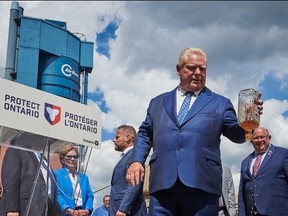
Watching Ontario Premier Doug Ford theatrically dump a bottle of Crown Royal was one of the most misguided political gestures we’ve seen in some time — at least since the beginning of Canada’s recent trade dispute with the United States.
Advertisement 2

Article content
Ford stopped short of demanding the LCBO pull the brand from shelves, but the damage was done. By calling for a boycott of one of Canada’s most recognizable spirits, he undermined the very principle of fair competition.
Article content
Article content
For any multinational considering investment in Ontario, the message could not be clearer: market access here is vulnerable to political whims rather than driven by the rules of supply and demand. That uncertainty is poison to capital flows.
The irony is striking. Crown Royal, a Canadian icon distilled domestically for generations, remains firmly committed to Canada. Its owner, Diageo—headquartered in London, not Washington—recently announced it would shutter its Amherstburg, Ontario facility, moving production to the U.S. The decision was a strategic one, driven by tariffs and logistics, not politics. The plant’s 200 jobs will vanish, but the brand will still be made in Canada at other facilities in Manitoba and Quebec. In other words, the bottle Ford dumped was Canadian-made, and will continue to be made in Canada, making his performance all the more incomprehensible.

Your Midday Sun
Article content
Advertisement 3
Article content
This isn’t an isolated case. Earlier this year, liquor boards across several provinces—including Ontario—banned the sale of U.S. wines and spirits in response to tariffs. That move deprived consumers of choice and invited retaliation. When governments decide which products win and which lose, competition weakens, innovation stalls, and prices climb. Consumers ultimately bear the cost.
Ford’s theatrics only lent legitimacy to Diageo’s decision to close its Ontario facility. The signal to foreign investors is chilling: if a Premier is willing to publicly trash your brand for reasons beyond your control, why risk capital in Ontario at all?
If policymakers truly want Canadians to support domestic industry, they should focus on building consumer confidence in our products rather than encouraging boycotts. Leadership should inspire pride, not inflame division. Leave boycotts to consumers and online activists; governments should protect the integrity of the market.
Advertisement 4
Article content
The last time Canadians rallied around a successful boycott was during the “ketchup wars” of 2016, when Loblaw delisted French’s ketchup in favour of Heinz—the very company that had just abandoned its Leamington plant. That movement was grassroots and authentic, and it worked: Loblaw relisted French’s. Politicians wisely stayed out of it, as they should have this time.
The lesson for leaders is simple: markets function best when governments set clear, fair rules of engagement and then step aside. Markets need rules, not stunts. When they interfere, consumers lose, investment flees, and even cherished national symbols like Crown Royal become pawns in a costly political theatre.
— Sylvain Charlebois is director of the Agri-Food Analytics Lab at Dalhousie University, co-host of The Food Professor Podcast and visiting scholar at McGill University.
Article content
