
Ontario government’s net debt has increased by $104.0 billion and this year will reach a projected $460.7 billion
Article content
From Crown Royal to anti-tariff ads, Ontario Premier Doug Ford seems to always make headlines. But his record of managing Ontario’s finances, which affects all Ontarians, gets relatively little attention. Perhaps a comparison can help underscore the point.
Advertisement 2

Article content
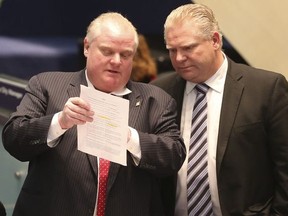
Doug Ford and his late brother, Rob, a former mayor of Toronto, come from a political dynasty that includes their father, Doug Sr., and nephew Michael, who’ve both served at Queen’s Park. The family is known for its populist bent, often emphasizing tax cuts and a distrust of government. But Doug’s track record as premier of Ontario has been the opposite and pales in comparison to Rob’s policies as mayor of Toronto.
Article content
Article content
Although his mayoral tenure ended in a series of sideshows — sadly, he died from cancer less than two years later — Rob Ford presided over important accomplishments during his time as mayor.
Rob backed the bluster in 2010
To recap, Rob took office in 2010, following a boisterous campaign that promised to “end to the gravy train.” He backed the bluster with real policies. He cut approximately $600 million from the city’s bloated budget, privatized garbage collection, scrapped the city’s vehicle registration tax, kept tax increases below the rate of inflation in three of his four years and increased municipal debt at a rate substantially lower than both of his successors.

Your Midday Sun
Article content
Advertisement 3
Article content
Rob often contrasted his policies with his predecessor, David Miller, who hiked municipal spending, raised existing taxes and created new ones. And while Doug served on council during Rob’s mayoralty, Doug Ford’s policies as premier more closely resemble Miller’s than those of his brother.
Since 2018, during Doug’s time as premier, the Ontario government’s net debt has increased nominally by $104.0 billion (a 7.3% increase after accounting for inflation) and this year will reach a projected $460.7 billion, the largest amount of debt in Ontario history (adjusted for inflation). Program spending (total spending minus debt interest costs) as a percentage of provincial gross domestic product (GDP) has increased from 17.3% in 2017 to 18.0% in 2024.
Advertisement 4
Article content
Consequently, after adjusting for inflation and population growth, program spending has grown from $12,754 to $13,463 per person since Doug entered the premier’s office. Despite his loud criticism of his predecessor, Kathleen Wynne, who he routinely characterized as an out-of-control spender, by any measure Doug Ford has increased government spending.
Broken promise
On taxes, Doug broke his promise to reduce Ontario’s business income tax rate from 11.5% to 10.5%, and broke his promise to reduce the middle personal income tax rate. In fact, he’s only made small moves when it comes to taxes, like cutting the gas tax and sending rebate cheques to Ontarians. Meanwhile, revenues have grown from 18.3% of provincial GDP to 19.2% during Ford’s tenure, despite his assertion that the “worst place you can hand your money over is to the government.”
Advertisement 5
Article content
And Ford has run six deficits in seven years. And plans to run at least two more in 2025 and 2026.
Of course, there are important differences between a municipal and provincial government. However, compared side-by-side, the fiscal track records of the Ford brothers reveal a stark contrast. Rob Ford actually slowed down the gravy train, with real spending restraint, tax cuts and less debt accumulation.
Doug Ford has substantially increased the size of Ontario’s government, reneged on his tax promises and plans to continue to spend beyond the government’s means and add to the province’s mountain of debt.
Clearly, if Doug took a page from brother Rob’s fiscal playbook, Ontario’s finances would be in better shape.
– Alex Whalen and Jake Fuss are analysts at the Fraser Institute
RECOMMENDED VIDEO

We apologize, but this video has failed to load.
Article content
