
Coastal First Nations is a group that was initially funded by left-wing American billionaires and their foundations, let’s not pretend otherwise.
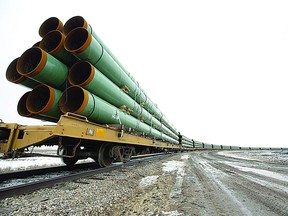
Article content
If you were to listen to most of Canada’s media, you’d be convinced that every First Nation on British Columbia’s coast is 100% against any possible oil pipeline. Time and again we keep hearing that Coastal First Nations are opposed to any pipeline and will stop any development.
Advertisement 2

Article content
Here’s the thing: while Coastal First Nations sounds like it might be a band or group in the region, in fact, it’s a not-for-profit based in Vancouver and set up with money from left-wing American foundations.
Article content
Article content
The offices of Coastal First Nations, which is officially known as the Great Bear Initiative Society, are found at the corner of Granville and West Hastings in Vancouver. This is an organization that attempts to speak as though they represent all Indigenous voices on the British Columbia Coast when they clearly do not.
Funded by left-wing American groups
The Great Bear Initiative Society, now known as CFN, is a political advocacy group that was set up with millions of dollars from left-wing American foundations opposed to oil and gas development in Canada. These organizations, such as the Tides Foundation, the Rockefeller Brothers Fund, the Gordon and Betty Moore Foundation, Margaret A. Cargill Philanthropies have donated millions to stop oil and gas production and that includes here in Canada.

Your Midday Sun
Article content
Advertisement 3
Article content
In 2008, the Rockefeller Brothers Fund, one of the early donors to Coastal First Nations, organized a campaign against Canada’s “tar sands” to try and shut down oil production in Northern Alberta. They were key to organizing against the Northern Gateway pipeline project which also proposed to build an oil pipeline to Kitimat, B.C., just as Alberta Premier Danielle Smith wants to do today.
What we’re seeing now, is simply a continuation of the opposition that was funded by American sources in the early days and now is too often funded by the Canadian federal government.
Back in 2014, when Northern Gateway was still a going concern, Art Sterritt, then the BMW driving executive director for the Coastal First Nations, threatened the project with Indigenous resistance even though most communities along the route supported Northern Gateway.
Advertisement 4
Article content
“Anybody tries sticking shovels in the ground, there’ll be First Nations there to stop them,” Sterritt told APTN at the time.
Recommended video

We apologize, but this video has failed to load.
Now, Coastal First Nations, the not-for-profit based in Vancouver and set up with left-wing anti-oil foundation money from the United States, is once again saying there will be no pipeline built on their watch.
“We are here to remind the Alberta government, the federal government, and any potential private proponent that we will never allow oil tankers on our coast, and that this pipeline project will never happen,” the group said in a statement last week.
Doesn’t speak for all coastal Indigenous communities
While they call themselves the “Rights and Title Holders” to the area, that’s not accurate. They are a not-for-profit that has some representation in coastal communities, but they don’t speak for everyone now anymore than they did in 2014 when CFN opposed Northern Gateway while most communities along the route supported it.
Advertisement 5
Article content
People like Ellis Ross, the current Conservative MP for Skeena-Bulkley Valley and former chief of the Haisla Nation in Kitimat — a potential export port for an oil pipeline — has long been in favour of a pipeline. He’s not alone on this but most media would have you believe that Coastal First Nations is a group representing all First Nations on the B.C. coast.
Time and again, the many First Nations communities who support resource development projects are ignored. Those who will claim that they oppose these projects will be given far more airtime, far more column inches in newspapers and far more attention than those who want to move forward economically.
Agreement provides path for pipeline
The memorandum of understanding between the federal government and Alberta doesn’t guarantee a pipeline; it puts forward the path for this to happen. Some want to act as if Indigenous groups have a veto, or that the British Columbia government has a veto when the law and the Supreme Court, have made clear that neither do.
We need a serious discussion about how or if a pipeline can be built to the northwest coast. Treating some groups as if they are bigger and more important than they are, or as if they hold special powers, doesn’t serve anyone.
Coastal First Nations is an activist group, that is all. Treat them as such.
Article content
