
The September incident, which saw federal agents detain 475 workers, mostly Korean, at a Hyundai-LG Energy Solution Ltd. facility, was a “bad surprise.”
Author of the article:

Published Nov 19, 2025 • 3 minute read
Article content
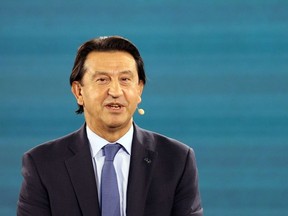
(Bloomberg) — Hyundai Motor Co. Chief Executive Officer José Muñoz said the South Korean automaker received an apology from the U.S. for an immigration raid that’s delayed construction at its Georgia battery plant, and that the company will press ahead with expansion plans in America.
Advertisement 2

Article content
The September incident, which saw federal agents detain 475 workers, mostly Korean, at a Hyundai-LG Energy Solution Ltd. facility, was a “bad surprise,” Muñoz told the Bloomberg New Economy Forum in Singapore. But it hasn’t dented Hyundai’s commitment to investing in the US, he said, adding the carmaker will double down on its plan.
Article content
Recommended Videos
Article content
“We cannot simply, because something happened, which is obviously an accident, and you get even apologies from the president of the United States, say this is going to change our plans,” he said.
“We want to maintain our investments in the country. We think in the mid to long term, things are going to get better.”
The raid exposed risks to the billions of dollars South Korea has invested in America’s clean energy push, including Hyundai’s own plans for $26 billion in investment. With the images of detainees shackled at the wrists, waist and ankles, the shock operation reverberated not just through the industry, but frayed diplomatic ties between Seoul and Washington.

Your Midday Sun
Article content
Advertisement 3
Article content
Muñoz recalled the events surrounding the raid, including receiving a call from the governor of Georgia. “So apparently somebody made a phone call and made it look like there were illegal immigrants. That’s absolutely not the case,” Muñoz said. Subsequently, relevant authorities and companies had found a solution to the visa gap that the action had exposed.
Still, Hyundai has said the raid is set to delay the plant’s construction by at least two-to-three months because of labor shortages, deepening challenges for a company which has already been one of the hardest hit by hefty US duties on Korean goods as trade talks stretched for months.
The carmaker has said the tariffs cost it about 1.8 trillion won ($1.2 billion) in the third quarter. It also previously lowered its profit expectations for 2025, while raising its revenue forecast, as it ramps up investment in the US to cushion the impact from the levies. Muñoz on Wednesday reiterated the need to rejig supply chains by investing in local markets and improving operations.
Advertisement 4
Article content
Beyond the fallout of the raid and tariffs, Muñoz highlighted the carmaker’s use of artificial intelligence and robotics to boost productivity, though the technologies are also transforming the employment landscape.
Hyundai is in the process of turning its facility in Singapore into a so-called dark factory — a plant that is so automated it essentially doesn’t need to turn on the lights.
“We are a tech company that happened to be in the automotive business,” he said in a separate interview with Bloomberg TV. “We don’t want the humans to lose the jobs. We want to capitalize and maximize the human potential,” he said, adding that the carmaker will need more engineering-type roles over manufacturing jobs.
That adjustment underscores the need to adapt to the rapid changes that are a feature of the modern auto industry.
Muñoz, the first foreigner to lead Hyundai, said the company has found success by adopting the ‘hurry hurry’ ethos of the Korean business world. “We change very fast,” he said.
Read More
-

Some Korean workers detained in Georgia immigration raid have returned to their jobs at Hyundai site
-

Immigration raid on car battery factory in Georgia forces Koreans into ‘vacation’
-

U.S. official offers regrets over detention of South Koreans

Article content
