
Those with sleep apnea were nearly twice as likely to have developed Parkinson’s six years after those diagnoses
Author of the article:

Published Nov 27, 2025 • Last updated 39 minutes ago • 3 minute read
Article content
Reviews and recommendations are unbiased and products are independently selected. Postmedia may earn an affiliate commission from purchases made through links on this page.
Researchers have found a potential link between obstructive sleep apnea and the development of Parkinson’s disease, according to a new study.
Advertisement 2

Article content
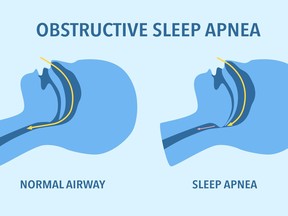
Obstructive sleep apnea – a disorder in which a person experiences a fully or partially collapsed airway during sleep, causing a lack of oxygen and non-restorative rest – affects millions of people and often goes undiagnosed, according to the American Medical Association. Parkinson’s disease, an incurable progressive movement disorder, is the second-most common neurodegenerative disorder in the United States and is thought to affect about 1.1 million people.
Article content
Article content
In the study, published in the journal JAMA Neurology on Monday, researchers combed through the health records of more than 11 million U.S. veterans from 1999 to 2022. Nearly 14 per cent of them had sleep apnea, and those with sleep apnea were nearly twice as likely to have developed Parkinson’s six years after those diagnoses than those who did not have the sleep disorder.

Your Midday Sun
Article content
Advertisement 3
Article content
Among those who treated their sleep apnea with continuous positive airway pressure therapy – also known as CPAP – early in their diagnoses, Parkinson’s case numbers were “significantly reduced,” the study stated.
Gregory Scott, one of the study’s co-authors and an assistant professor of pathology in Oregon Health and Science University’s School of Medicine, said in a release that obstructive sleep apnea is “not at all a guarantee” that someone will develop Parkinson’s, “but it significantly increases the chances.”
Symptoms of sleep apnea include snoring, gasping for air, fatigue even after a perceived full night of sleep, and frequent waking during the night. Parkinson’s disease is associated with a long list of potential symptoms, including tremors, difficulty moving or walking, problems with balance, drooling, sleep disorders, and issues speaking or swallowing.
Advertisement 4
Article content
Danny Eckert, an expert in obstructive sleep apnea and a professor at Flinders University’s College of Medicine and Public Health in Australia, called it an “interesting and novel finding” that adds to a growing body of research suggesting that repeated sleep disruption – no matter the cause – “has a range of adverse outcomes.”
Another sleep condition, rapid eye movement sleep behavior disorder, was also linked to Parkinson’s disease, he said.
“One of the cautionary notes is that it was not a randomized trial,” Eckert added, “so the people who seem to be doing better that were on CPAP therapy may just be the ones that are more likely to adapt a healthy lifestyle.”
Though the study does not prove obstructive sleep apnea causes Parkinson’s disease, experts believe it may offer a clue to where researchers could dig further.
Advertisement 5
Article content
Kin Yuen, a sleep medicine physician and assistant clinical professor at the University of California at San Francisco, said the findings are not surprising given that poor sleep tends to be associated with worse neurological outcomes. It also remains unclear how strong the links between obstructive sleep apnea and Parkinson’s truly are.
However, one theory is that the “repeated lack of oxygen” caused by obstructive sleep apnea may “impair the brain’s ‘repair’ during sleep,” she said in an email.
“Clinically, patients with Parkinson’s syndrome or disease are often seen in sleep clinics because of comorbid obstructive sleep apnea,” Yuen added.
Lee Neilson, the study’s lead author and an assistant professor of neurology at Oregon Health and Science University, offered a similar theory.
“If you stop breathing and oxygen is not at a normal level, your neurons are probably not functioning at a normal level either,” he said. “Add that up night after night, year after year, and it may explain why fixing the problem by using CPAP may build in some resilience against neurodegenerative conditions, including Parkinson’s.”
For more health news and content around diseases, conditions, wellness, healthy living, drugs, treatments and more, head to Healthing.ca – a member of the Postmedia Network.
Article content
